The Graeme McDaniel Foundation’s Board of Directors (BoD) and Medical Review Team (MRT) are in charge of collecting and reviewing each congenital heart defect research grant application that is submitted to the Foundation. During the annual review process, the MRT helps the BoD to evaluate the projects in contention for the foundation’s funding and to identify the projects that may have the greatest impact and most closely align with our mission.
Please find the research grant application here.
We are extremely grateful for MRT’s investment in the heart community and time given to support this effort. It’s an honor to introduce our Medical Review Team with you.
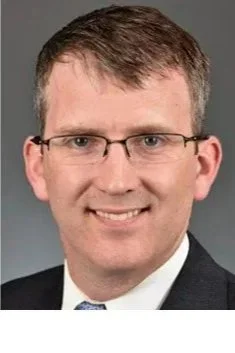
David Hoganson, MD
Dr. Hoganson is an Assistant in Cardiac Surgery, Department of Cardiac Surgery at Boston Children’s Hospital, and is an Assistant Professor of Surgery at Harvard Medical School. His clinical focus is on neonates and children with congenital heart disease. He has co-lead development of patient specific 3D modeling and computational flow modeling of complex cardiac disease for improved pre-operative planning and intraoperative guidance. His lab also focuses on development of medical devices to improve the safety and effectiveness of cardiac surgery. Dr. Hoganson has a background in engineering and industry experience developing cardiovascular medical devices prior to medical school. He graduated from the Temple University School of Medicine in 2004 and completed his general surgery residency and CT fellowship at the Washington University in St. Louis, and completed a congenital cardiac surgery fellowship at the Boston Children’s Hospital in 2016.

C. Huie Lin MD, PhD, FACC FSCAI
Huie Lin is the Director of the Adult Congenital Interventional Cardiology and William W. Parmley Chair of Cardiology at University of California, San Francisco. He received his MD/PhD from the University of Virginia and completed internal medicine residency at Beth Israel Deaconess Medical Center in Boston. He went on to train in adult, congenital, and interventional cardiology at Barnes-Jewish and St Louis Children’s Hospital at Washington University. His mission is to innovate transcatheter and hybrid cardiovascular therapies for adults with congenital heart disease.

Shaine A. Morris, MD, MPH
Dr. Shaine Morris is a pediatric and fetal cardiologist at Texas Children's Hospital and Baylor College of Medicine. After medical school at UT Southwestern, she completed pediatric training at Boston Children's Hospital/Harvard Medical School, followed pediatric cardiology training at TCH, then cardiac imaging at Boston Children's, and then a Masters of Public Health at Harvard. She joined faculty at TCH in 2010. She serves as the Medical Director of the Cardiovascular Genetics program and as the Director of the Fetal Cardiac Intervention Program, and splits her time between seeing patients and leading clinical research studies. Much of her research focuses on understanding how to have the best possible outcomes for children with congenital heart disease, starting in fetal life, and on personalizing care based on each child's individual characteristics.
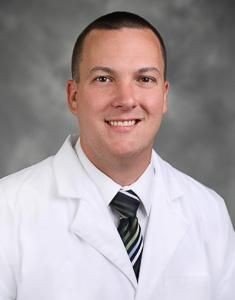
Douglas Overbey, MD, MPH
Douglas M. Overbey, MD, MPH, is an Assistant Professor of Surgery and Pediatrics at Duke University Medical Center, specializing in pediatric and adult congenital heart surgery. He serves as Co-Director of the Single Ventricle Program and Director of the Minimally Invasive Congenital Cardiac Surgery Program, bringing over six years of experience at Duke, where he completed the inaugural congenital cardiac surgery fellowship.
Dr. Overbey’s clinical expertise spans neonatal, pediatric and adult congenital heart surgery, robotic congenital cardiac surgery, pediatric heart transplantation, and mechanical circulatory support. As Assistant Program Director for Duke’s Cardiothoracic Surgery Fellowship, he is committed to education and mentorship. His research focuses on advancing the field through innovative therapies, including partial heart and thymus-heart combined transplantations, with the goal of expanding and optimizing life-saving treatments for congenital heart disease.
Widely published in leading surgical and medical journals, Dr. Overbey’s recent work highlights advances in heart transplantation, regional perfusion, and minimally invasive techniques. He earned his MPH from the University of Colorado and his MD from the University of Missouri, completing fellowships and residency at Duke and the University of Colorado. Dr. Overbey is committed to improving outcomes and quality of life for patients with congenital heart disease through innovation, research, and education.
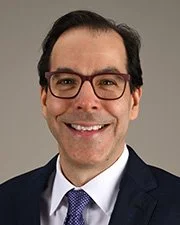
Siddharth K. Prakash, MD, PhD
Siddharth Prakash has a Ph.D. in Molecular and Human Genetics from Baylor College of Medicine, where he also completed his residency in Internal Medicine and a fellowship in Cardiovascular Disease. He is board certified in cardiology, echocardiography, and adult congenital heart disease. Since 2011, Dr. Prakash has worked as the cardiologist in the Multidisciplinary Aortic and Vascular Disease Clinic at McGovern Medical School, a part of the University of Texas Health Science Center at Houston, where he specializes in medical therapy, imaging, and surveillance of patients with heritable aortic and vascular diseases. He is Professor of Internal Medicine and is co-director of the Turner Syndrome Adult Comprehensive Care Center, a multispecialty clinic that sees Turner syndrome patients from across the southwest region. He leads the national Turner Syndrome Research Registry and is chair of the Scientific Advisory Board of the Turner Syndrome Society of the United States. He also co-chairs the Collaborative Clinical Science working group of the GenTAC Alliance and is an investigator with the Montalcino Aortic Consortium. Dr. Prakash’s translational research focuses on the contribution of rare genetic variants to bicuspid aortic valve (BAV), the most common adult congenital heart defect. Dr. Prakash uses an innovative strategy to identify new candidate genes for BAV, based in part on the hypothesis that reduced dosage of genes on the X chromosome is responsible for sex differences in the prevalence of BAV and other congenital heart diseases. His team demonstrated that specific rare genetic variants predict complications of patients with BAV. Dr. Prakash has received funding from the National Science Foundation, American Heart Association, National Institutes of Health, and the John Ritter Foundation for Aortic Health, which funded the first clinical trial of exercise in aortic dissection survivors led by Dr. Prakash.

The Graeme McDaniel Foundation Congenital Heart Defect Grants are designed to support research that directly affects patients that are born, or will be born, and living with congenital heart disease. Our goal is to fund research that will affect the largest population of CHD patients that will transform the field.
What are some major research themes the foundation has funded in the past?
Genetics
Fetal diagnosis and intervention
Pediatric devices
Neurodevelopmental and functional outcomes
Transitional care
Technological development and advancements
Quality improvement
Any research field that benefits the CHD population is eligible to apply for a grant
Are there word or page limits to the application?
We ask that you use your best judgement. The form has a character limit of approximately 32,000 characters. Typically, grants, read by the Foundation’s Medical Review Team (professional reviewers) and Board of Directors (lay reviewers), are a few pages long. Figures, tables, and photos are encouraged. If you have trouble uploading these to the application form, you may email them at the time of application submission.
I’m not a physician. Can I still apply for a grant?
Yes, applications from researchers in the cardiac field will be reviewed.
Is there a limit to the number of applications submitted by a PI (Principal Investigator) during a single grant cycle?
Yes. Two applications may be submitted, per PI, during each grant award cycle.
Are indirect costs allowed?
To ensure The Graeme McDaniel Foundation grant funds are used to their maximum extent for life-saving CHD research, indirect cost recovery is NOT allowed.
How much is an average grant and what is the grant period?
Typically, we fund 1-year grants and grants range from $25,000-$100,000. As projects progress and show promising results, we encourage our previous recipients to apply again.
What is allowed for conference related expenses?
Starting in 2027, the Foundation will allow up to 5% of the annual budget to be used for conferences where the funded research project will be presented, including related travel, and publications.
What is allowed for salary support?
Salary support for the principal investigator and/or co-investigators, closely follows the NIH salary cap calculations, with the exception of indirect and fringe benefit costs. Those are not allowed and will not be covered by the Foundation.
What is not included:
Non-allowable costs are outlined below. This list is not exclusive.
Alteration or renovation of lab/office space
Indirect costs
Audiovisual materials
Insurance
Audit costs
New construction
Communications
Entertainment costs
Taxes
Tuition
Fundraising
*Research grants distributed by The Graeme McDaniel Foundation will be awarded to a specific PI and cannot be used for institutional block funding – a general grant made to the university/department.
Important Dates:
January 1 – Grant application period opens
April 30 – Grant application period closes/All applications due
July 1 – Grants are awarded
If you have additional questions, please email info@graememcdanielfoundation.org
Acknowledgement of funding:
By accepting a grant from The Graeme McDaniel Foundation, you are in agreement that you will acknowledge the Foundation’s support by adding the following statement to publications, “This work was funded by a generous grant by The Graeme McDaniel Foundation.”